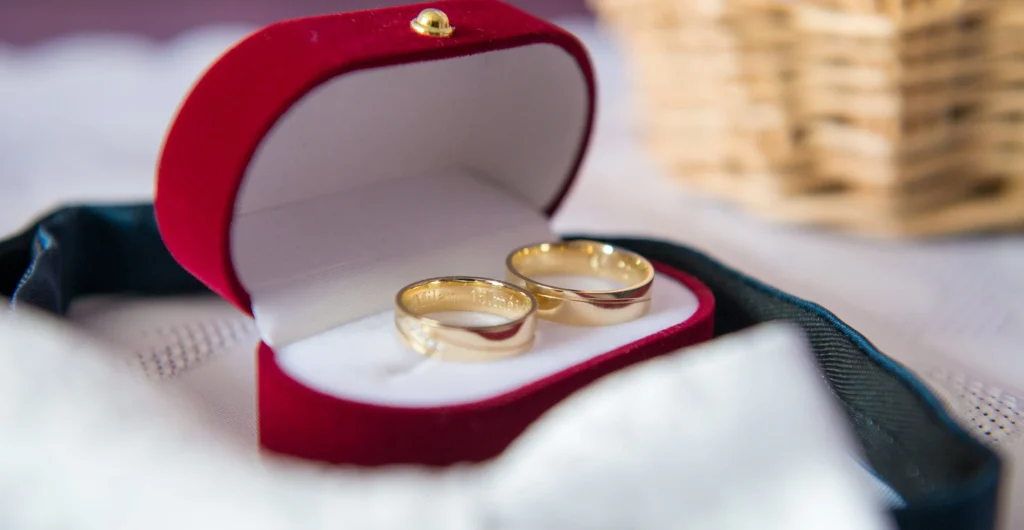
An eternity ring is a continuous band of diamonds or gemstones, set all the way around with no beginning and no end. It symbolises never-ending love, and is also called an infinity ring or a diamond eternity band.
If you’re wondering about the eternity ring meaning, or planning a gift for an anniversary, a new baby or another milestone, the practical choices matter too. Here’s a clear guide to occasions, fingers, settings, fit and care.
What an eternity ring looks like
Most eternity rings run between 2mm and 4mm wide, with the stones set close together in claws, a channel or individual metal rims. Round brilliant diamonds are the most common, though oval, emerald, princess and baguette cuts each give the band a different rhythm.
What makes a good one is less obvious than it looks. Every stone has to match its neighbour in size, colour and cut so the band reads as one unbroken line of light. A single stone that is a shade warmer or a fraction smaller breaks that line, and the eye goes straight to it. Matching the stones before they are set is most of the work, and it is where a well-made band separates from a cheap one.
Eternity ring meaning: the symbolism and a little history
The circle is the simple part of the meaning: it has no start or finish. A continuous line of stones extends that idea, making the ring a symbol of lasting love and commitment.
The story people love to repeat traces the endless band back to ancient Egyptian, Greek and Roman ideas about circles and eternal life. The modern diamond eternity ring, as we recognise it today, became popular much later. De Beers helped establish it as an anniversary gift in the 1960s, and the tradition has continued in many different forms.
There’s no single rule about what an eternity ring must mark. Its meaning comes from the person giving it, the person wearing it and the moment they choose to celebrate.
When do you get an eternity ring?
An eternity ring can mark a relationship milestone, a change in family life or simply a moment you want to remember. Common occasions include:
A first wedding anniversary
Some couples mark their first year together as married with a diamond band. It can be worn alongside an engagement ring and wedding band as a new layer in the set.
The birth of a child
A new baby is a meaningful reason to give a ring. You might choose diamonds, or consider a coloured gemstone band that reflects a personal detail such as a birth month.
A significant anniversary or birthday
A tenth, twentieth, twenty-fifth or thirtieth anniversary can be a natural time for an eternity ring. It can also mark a milestone birthday or another important chapter you’ve shared.
A wedding day, or no occasion at all
Some couples give rings to each other on their wedding day. Others don’t wait for a date on the calendar. A ring chosen just because can carry its own meaning.
If you’re planning a surprise, consider whether your partner prefers to choose jewellery together. With a ring that may be worn every day, their input on fit and style can be helpful.
The anniversaries people choose most
The first anniversary, because the first year is complete and the set becomes three rings. The fifth, because it is early enough to wear the band for decades. The tenth, where diamond is the modern gift, which makes it the classic eternity ring year. The twenty-fifth, often marked with a band that matches or upgrades the original rings. And then the occasions that were never on a list: a vow renewal, a move overseas, a business built together, coming through an illness.
How far ahead to buy one
Start six to eight weeks before the date. A finished design can sometimes be sized and ready within days, but a custom band, matched stones or an unusual size needs time to be made properly. Rushing is how people end up with a band that does not sit right beside their other rings.
Eternity rings after a baby
An eternity ring is one of the most popular gifts for a new mother, sometimes called a maternity ring or a push present. Parents often give it meaning by setting the child’s birthstone into the band, or by adding a stone for each child as the family grows. A half eternity band leaves room for that, because stones can be added to the plain lower half later.
Eternity ring vs wedding ring vs engagement ring
These rings can all be worn together, but they usually have different roles.
Engagement ring marks a promise to marry. It’s given at the proposal, usually worn on the ring finger, and typically features a centre stone.
Wedding ring is the band exchanged at the wedding. It sits on the ring finger, often closest to the hand, and is usually plain metal or a slender diamond-set band.
Eternity ring is a band set with stones partly or all the way around. It’s given on an anniversary, a family milestone or any occasion you choose, and can be worn on the ring finger, another finger or the other hand.
A common stack places the wedding band closest to the hand, with the engagement ring and eternity ring above it. But there’s no required order. Some people wear an eternity band on the other hand, particularly if the rings feel crowded together.
Try the full stack before settling on a size or profile. A ring that fits well on its own can feel tight when worn beside two other bands.
Full, half or three-quarter eternity ring?
The main difference is how far the stones travel around the band. That choice affects appearance, comfort, cost and future adjustment.
Full eternity
A full eternity ring has stones set around the entire circumference. The diamonds remain visible even if the ring turns on your finger, but the stones underneath your hand are more exposed to knocks and contact with surfaces.
Because stones go all the way around, resizing is difficult. A jeweller may need to reset stones or remake the band to change its size. This option also usually costs more than a comparable half band because it uses more stones and requires more setting work.
Half eternity
A half eternity ring has stones across the top section of the band, with plain metal underneath. It leaves fewer stones exposed to everyday knocks and can often be resized, depending on the design and how much adjustment is needed.
For a first eternity ring, or if you have an active job and use your hands a lot, a half band is often a practical starting point. You still see the stones when your hand is relaxed, while the plain underside can feel easier for everyday wear.
A half band is not automatically the right choice for everyone. The setting, finger shape and how the ring will sit beside your other rings all affect comfort.
Three-quarter eternity
A three-quarter band carries stones across three quarters of the circumference, leaving a plain section underneath. It looks almost continuous from the top, and the plain section usually leaves room to resize by about one size. It is a sensible middle path when you want the look of a full band but not the risk of a size that cannot change.
How to choose between them
A full band looks complete from every side, but the stones underneath press against the neighbouring fingers and take knocks from everything your palm touches. A half band puts all the sparkle where people see it and leaves smooth metal underneath, which is why it suits people who type, train or work with their hands. If you are buying as a surprise and are not certain of the size, a half band is the safer choice.

Which finger should an eternity ring go on?
The ring finger is a common choice, often stacked above the wedding band. It’s also a frequent request from couples visiting us in Adelaide. But an eternity ring can be worn on the middle finger, on the right hand, or wherever it feels comfortable.
Think about how you already wear your rings. If you want to stack the new band with an engagement ring and wedding ring, take all three along to a fitting. Their widths and shapes affect how they sit together.
Finger size can change over time, and a full eternity band is harder to adjust. If you expect the fit may need changing later, discuss that before choosing the design.
What order the three rings go in
From the base of the finger upwards, the traditional order is wedding band, then engagement ring, then eternity ring. The wedding band stays closest to the heart, and the eternity ring acts as a keeper that holds the engagement ring in place.
Two other arrangements are common. Putting the eternity ring between the other two frames a large centre stone with a band on either side. Wearing it on the right hand keeps the left hand uncluttered and lets the band stand on its own.
Four things to check before you commit
Width, because a very slim band can look lost beside a wide wedding band. Height, because raised claws rub against neighbouring rings and wear them down over time. Fit, because some engagement rings leave a gap when a straight band sits beside them, which is what a shaped band is for. And comfort, because three rings on one finger feel bulky to some people.
The simplest way to avoid regret is to try the band on with the rings you already wear, never on its own.
Choosing the details: metal, setting and stones
A well-chosen band should suit your other jewellery and feel right on your hand. Small design decisions can make a noticeable difference.
Metal and diamond setting
White gold and platinum give a cool-toned backdrop that can make diamonds appear brighter against the metal. Yellow and rose gold bring warmth and contrast. The best match is a matter of preference, and you can also mix metals if that suits your existing rings.
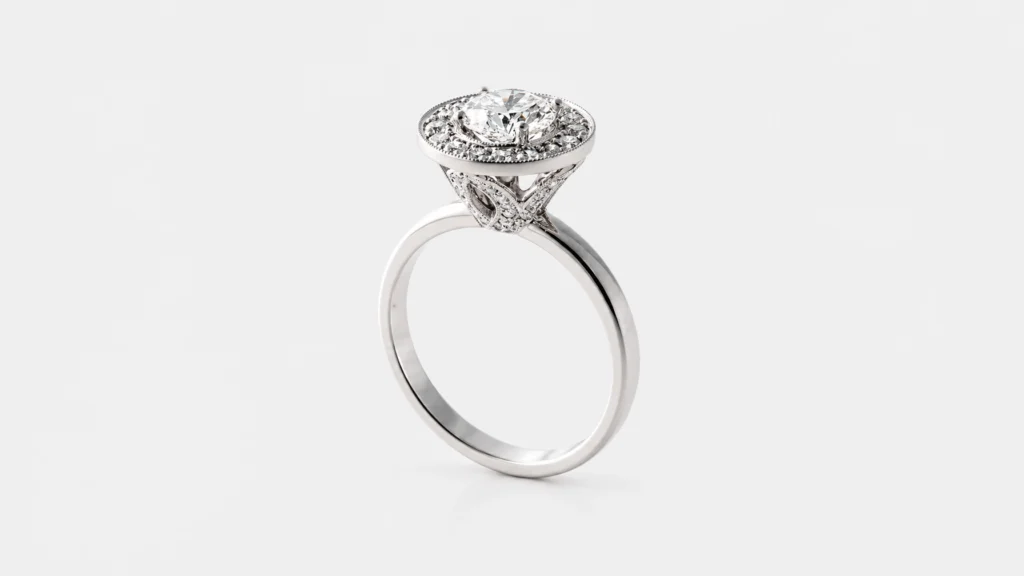
Claw settings hold each stone with small metal supports, leaving more of the diamond visible. A shared claw setting uses supports between neighbouring stones, giving the band a lighter look. The 18ct white gold band pictured above is a DDS design with a flat base, a practical detail that helps it turn less on the finger.
A channel setting holds stones between two metal edges. The stones sit more flush with the band, which can make it a good choice if you prefer fewer raised details to catch on clothing or a desk. The right setting depends on how you wear your hands and the look you prefer.
The settings you will meet most often
Claw grips each stone with small metal claws and shows the most diamond. Shared claw has each claw holding two neighbouring stones, which reads lighter and more continuous along the band. Channel sets the stones between two walls of metal, so they sit flush and snag on nothing. Bezel wraps a thin metal rim around each stone, which is the most secure of all. Pavé uses tiny beads of metal to hold rows of small stones; it sparkles beautifully and asks the most of you in return.
For a band worn every day beside an engagement ring, channel or bezel is the safest choice, because the smooth edges will not rub against the ring next to them. Claw and shared claw show more diamond, and suit someone who is gentle on their hands.

Shape, size and colour
Round brilliant diamonds are a classic choice for an eternity band. Emerald, oval and radiant cuts create a more linear or contemporary pattern. The size of each stone changes the feel of the ring: smaller stones set around the band can give an even, fine sparkle, while larger stones have more presence.
Natural and lab-grown diamonds have the same appearance and physical properties; their difference is origin and, often, price. DDS offers both, with clear information about the stones. For more on how to compare them, read our guide to lab-grown and natural diamonds.
Diamonds aren’t the only option. Sapphire or emerald stones can add colour while keeping the continuous-band design. You can explore examples in our eternity ring collection, including bands designed to fit alongside an engagement ring.

Which stones survive daily wear
Hardness matters more in an eternity ring than in most jewellery, because every stone sits on the surface of the band where it meets doors, benches and other rings.
Diamond is the hardest at 10 on the Mohs scale and handles daily life without complaint. Sapphire and ruby sit just below at 9, which makes either of them a practical way to add colour. Emerald is softer, around 7.5 to 8, and often carries natural inclusions that make it prone to chipping, so choose a channel or bezel setting to protect the edges if an emerald is what you want.
Matching the stones to your engagement ring
If the band will sit beside a diamond engagement ring, match the colour of the diamonds as closely as you can. A bright white eternity band next to a warmer centre stone makes the engagement diamond look yellow by comparison. Bring the engagement ring when you choose, and ask to see the stones matched before they are set.
How much does an eternity ring cost?
There isn’t one standard price for an eternity ring. The cost varies with the number and size of the stones, whether the band is full or half, the metal, the setting style and the time needed to hand-set the stones.
A custom design can also include details such as a particular diamond shape, coloured gemstones or a profile that fits an existing ring. These choices affect the final quote, so it’s useful to bring your other rings and discuss what matters most to you.
If the ring is for a specific date, allow around four to six weeks for a custom band. It can take longer during busy periods such as Christmas and Valentine’s Day, so it’s worth asking about timing early.
Can an eternity ring be an engagement ring?
Yes, and it is a growing choice for people who want something low and comfortable that will not catch on gloves, hair or knitwear. Nurses, tradespeople and anyone who works with their hands find it a sensible option, because there is no tall centre stone to knock against anything. For more presence, choose larger stones across a half band, or pair two bands together as an engagement and wedding set.
Do men wear eternity rings?
Yes, and more of them each year. Men’s eternity rings tend to be wider, with the stones set flush in a channel or bezel so the band stays smooth. Black diamonds, sapphires and brushed finishes are common choices, and plenty of men wear one as a wedding band.
The mistakes worth avoiding
A full band chosen when the size may change, because fingers change with pregnancy, age and weight, and a half or three-quarter band keeps resizing possible. Ignoring the stack, when a ring that looks perfect alone gaps or crowds the rings beside it. A soft stone chosen for daily wear. Buying for looks over comfort, so the ring catches on clothes and ends up in a drawer. And mismatched stones, where one diamond a shade warmer breaks the line.
Sizing, care and aftercare
Fit deserves special attention with an eternity band. With stones set all the way around, a full eternity ring cannot be resized like a plain metal band without disturbing the setting. Getting the size right before the ring is made is important; if the fit changes later, resetting stones or remaking the ring may be part of the conversation.
A half eternity ring is generally easier to resize, but the design still matters. A jeweller needs to check how the stones and setting will respond to any adjustment.
For care, remove your ring when doing tasks that could knock or catch it. Have the band professionally cleaned and inspected so a jeweller can check that the claws and stones are secure. White gold may need re-rhodium plating as it wears; for many people that’s around every 12–24 months, depending on wear.
At DDS Diamonds, rings are designed and handcrafted in our Burnside studio, drawing on more than 65 years of Swiss craftsmanship and Australian artistry. We’re an award-winning family-owned studio, with lifetime aftercare that includes professional cleaning and inspections. If you’re considering a band that needs to sit neatly with an existing ring, our custom design process can start with a conversation, sketches and careful consideration of the fit.
Frequently asked questions
What does an eternity ring symbolise?
An eternity ring symbolises lasting love and commitment. Its continuous line of stones has no beginning or end, which is why the design is associated with an unbroken bond.
Which finger should an eternity ring go on?
Many people wear an eternity ring on the ring finger, stacked with their wedding and engagement rings. You can also wear it on another finger or your other hand; comfort and personal preference matter most.
Can an eternity ring be resized?
A half eternity band can often be resized, depending on its design. A full eternity band is much harder to adjust because stones go all the way around and may need to be reset or the ring remade.
When should you give an eternity ring?
Common occasions include a first wedding anniversary, the birth of a child, a milestone anniversary, a birthday or a wedding day. There’s no fixed rule: it can also be a gift without a particular occasion.
Do eternity rings have to be diamonds?
No. Diamonds are the most common choice because they hold up to daily wear and sit easily beside most engagement and wedding sets. Coloured stones can be the better answer when the ring is meant to feel personal, as long as you think about durability and choose a protective setting.
Does an eternity ring replace a wedding band?
No. It marks a milestone after the wedding rather than replacing anything. Most people wear it as a third ring, stacked with the other two, or on the other hand.
Will it stack with the rings I already have?
Band width, stone height and the profile of your engagement ring all decide whether the rings sit flush or leave a gap. Some eternity styles rub against neighbouring rings and wear them over time, especially where the stones sit high. Try the band on with the rings you already wear rather than on its own.
Is an eternity ring the same as an anniversary ring?
An eternity ring is a style of ring, defined by its continuous row of stones. An anniversary ring describes why it is given; an eternity ring can be an anniversary gift, but anniversary rings can have other designs too.
If you’re considering an eternity ring in Adelaide, you’re welcome to book a consultation at our Burnside studio or call us on 08 8332 0707 to talk through the options.