Seen halo rings on Instagram or Pinterest and wondered if they’re right for you? A halo engagement ring has a centre diamond or gemstone framed by a border of smaller stones. That border adds sparkle and changes the way the centre stone looks, but the details (its shape, width and setting) make all the difference.
Here’s a jeweller’s guide to the main styles, the practical pros and cons, and what to consider when designing one in Adelaide.
What is a halo engagement ring?
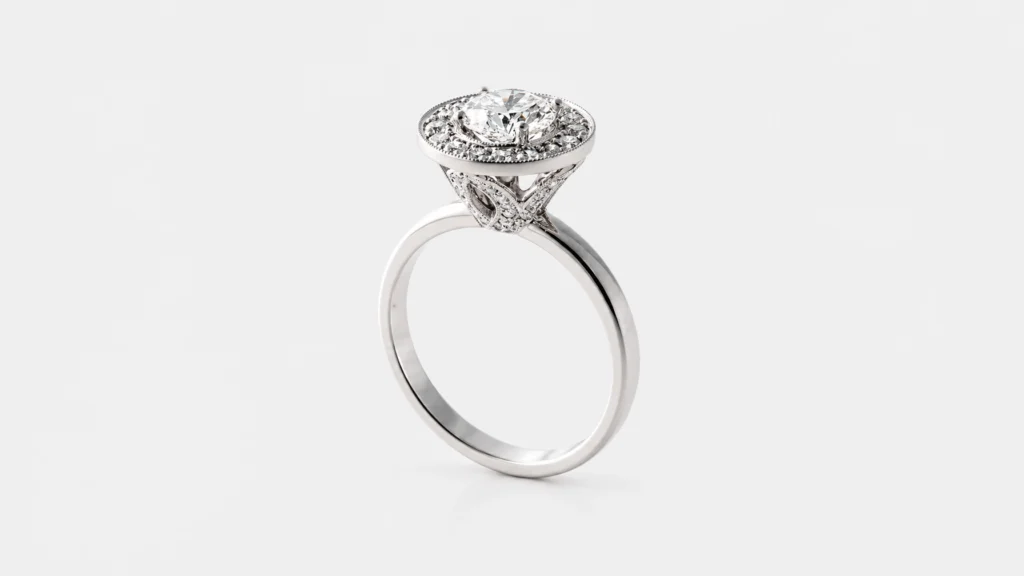
A halo engagement ring has a centre diamond or gemstone surrounded by a close-set border of smaller stones, most often diamonds. Viewed from above, the stones create a frame around the centre; viewed from the side, you may see more of the setting’s structure or extra details beneath the centre stone.
The smaller stones are often pavé-set, which means they’re held close together by tiny beads or claws of metal. A halo can be delicate and understated, or wider and more decorative. It can also be designed around many centre-stone shapes, not only round diamonds.
Why are halos so popular?
A halo gives the ring a broader outline than the centre stone alone. That border can make the centre look larger face-up, sometimes described as giving the impression of roughly half a carat more presence. It’s a visual effect, not a change to the diamond’s actual carat weight, and the result depends on the stone, halo proportions and design.
The small diamonds add points of light around the centre, so the ring catches the eye from more angles. They also create a clear frame, which can draw attention to the centre stone’s shape or contrast with a coloured gemstone.
If you’re comparing engagement rings in Adelaide, try looking at the centre stone and halo together, rather than judging the centre diamond by itself. The overall outline is what you’ll see when the ring is worn.
Different halo styles
Single halo
A single halo has one border of small stones. It’s a balanced choice: more detailed than a solitaire, without adding as much width as a double row. A jeweller can shape the halo to follow a round, cushion, oval or other centre stone.
Double halo

A double halo engagement ring has two rows around the centre stone. It creates a wider, more decorative face-up look, as shown in the pear-shaped ring below. The proportions matter: the two rows should frame the centre, not make it disappear among the surrounding diamonds.
Hidden halo
A hidden halo engagement ring has small stones set beneath the centre stone, often around the setting’s gallery. From above, the ring can look closer to a solitaire; from the side, the hidden row adds a flash of detail. It doesn’t create the same larger outline as a visible halo, so it suits someone who wants a clean top view with an extra detail to discover.

Vintage halo
A vintage halo engagement ring might include milgrain, tiny bead-like detailing along an edge, engraving, or a more intricate outline. These details can bring to mind the geometric styles of the Art Deco period, while the proportions and finish can still feel light and suited to everyday wear.
Halos for oval, pear and other centre shapes
A halo doesn’t need to be round. For an oval, it can follow the long, soft outline; for a pear, it traces the teardrop shape. A marquise halo can emphasise the stone’s length, while a square or cushion halo can echo the centre’s corners, either gently rounded or kept crisp.
Emerald-cut centres have long, straight facets rather than the bright, scattered sparkle of a brilliant cut. A halo can add a brighter border while keeping that clean, architectural outline. With pear and marquise stones, the pointed ends need careful design and protection.
Coloured-gemstone halos
Small diamonds around a sapphire or emerald can create a bright border and make the centre colour stand out. The metal choice affects the overall feel, too: white metal gives a crisp contrast, while yellow or rose gold adds warmth. Gemstone durability and care should be considered when choosing a coloured centre for a ring worn every day.

Halo engagement ring pros and cons
A halo can be a good choice if you like extra sparkle and want a strong face-up presence. It can give a smaller or medium-sized centre stone a more generous outline, and it offers plenty of room to personalise the shape, metal and detailing.
There are trade-offs. More small stones and more setting work usually mean greater design complexity than a simple solitaire. Pavé-set diamonds can also collect lotion, soap and everyday dirt, so the ring may need more frequent cleaning. The small settings should be checked as part of regular jewellery care.
A prominent halo may also affect how a wedding band fits. If you’d like a straight band to sit flush against the engagement ring, it’s worth planning for that from the start. A contoured band, which follows the outline of the setting, is another option.
Halos often look especially balanced with smaller-to-medium centre stones, but that isn’t a strict rule. The best proportions depend on the centre’s shape, your finger and the look you want. If you have a larger centre stone in mind, a jeweller can help you compare a fine halo with a broader one, or decide that the stone looks best on its own.
Which metal suits a halo?
White gold or platinum can make a white-diamond halo appear to blend into one bright outline. That can strengthen the impression of a larger face-up design. Yellow or rose gold creates more contrast between the setting and the diamonds, giving the ring a warmer, more defined frame.
Two-tone designs can offer both effects: for example, a yellow-gold band with a white-gold halo around the centre. During a consultation, it helps to compare metals beside the stone, because the colour of the setting can change how the whole ring reads.
Are halo rings timeless or trendy?
Halo settings have a history going back more than a century, and the style became particularly associated with Art Deco designs in the 1920s and 1930s. The look has changed over time. Modern halos can be slimmer and more restrained than some of the larger, more ornate versions seen in earlier decades.
As with any ring, a design is more likely to feel right for years if it suits the person wearing it, not just a trend or an image saved online. Consider whether you like the outline from above, the profile from the side and the way it pairs with a wedding band. A well-proportioned, well-made halo can feel at home in many styles.
Designing a halo ring with us
At DDS Diamonds, a custom ring starts with a conversation about what you like, how you’ll wear it and what matters most to you. At our Burnside studio, we can discuss centre-stone shapes, halo proportions, metal colours and how the engagement ring might sit with a future wedding band.
From there, we develop hand-drawn sketches and design renderings so you can see the direction before the ring is made. You can choose from certified, conflict-free natural diamonds or lab-grown diamonds, and we’ll talk through the differences openly. Our pieces are designed and handcrafted in-house, drawing on more than 65 years of Swiss craftsmanship and Australian artistry.
DDS is an award-winning family-owned studio, including the 2024 SA Bridal Industry Association Best Ring Manufacturer award and multiple Designer of Dreams awards. We also provide lifetime aftercare, including professional cleaning, inspections and re-rhodium plating where needed. Regular checks are especially useful for a halo: the smaller stones and their settings deserve attention as the ring is worn.

If you’d like to explore a bespoke design, find out more about our custom jewellery design process.
Halo engagement ring FAQs
What is a halo on a ring?
A halo is a border of small stones set around a centre diamond or gemstone. It creates a framed look and adds sparkle around the centre.
Does a halo make a diamond look bigger?
It can make the centre stone appear larger from above by giving it a broader outline. The effect varies with the diamond’s shape and the halo’s proportions; it doesn’t change the diamond’s actual carat weight.
Are halo rings still in style in 2026?
Halo settings remain a familiar choice, with designs ranging from vintage-inspired to clean and contemporary. Whether one feels timeless to you comes down to the proportions and details you’ll enjoy wearing.
How much extra does a halo setting cost?
A halo adds to the cost because it requires extra small diamonds and additional setting work. The amount varies with the number and quality of the stones, the design and the metal, so the best way to get an accurate figure is to request a quote for your preferred style.
If you’d like to see what a halo could look like around your chosen centre stone, you’re welcome to book a consultation at our Burnside studio or call us on 08 8332 0707.