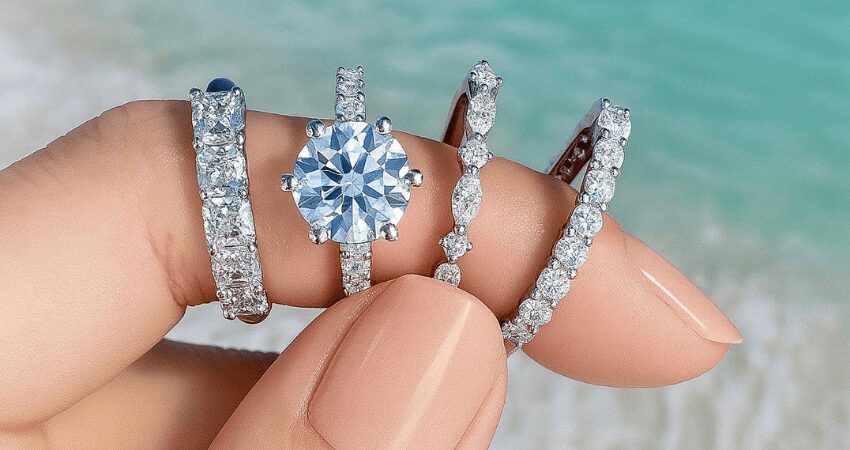
When shopping for fine jewellery, be it diamond earrings, diamond rings, or diamond engagement rings in Adelaide, you’ll often come across two terms that seem interchangeable: diamond certification and jewellery appraisal.
They sound similar, but they serve completely different purposes. Understanding the difference can be the key to protecting your investment and ensuring that the dazzling gem you fall in love with is as authentic and valuable as it appears.
This guide from DDS Diamonds, your trusted Adelaide jeweller, breaks it all down so you can buy with confidence.
Why Knowing the Difference Matters
Buying diamonds in Adelaide is not only about how much a gem sparkles under the light. It is about knowing what lies behind that sparkle. Every diamond carries emotional and financial value. For some, it represents a lifelong promise. For others, it becomes a treasured heirloom meant to be passed on. No matter the reason, one thing remains constant: trust is essential.
When you invest in diamond rings, diamond earrings, or diamond engagement rings in Adelaide, you should know exactly what you are paying for. This is where understanding the difference between a diamond certificate and a jewellery appraisal becomes vital.
A diamond certificate acts as your gem’s passport. It tells you what you are buying, describing the diamond’s unique qualities such as cut, colour, clarity, and carat weight. The information is verified by an independent gemological laboratory, ensuring it is accurate and unbiased.
A jewellery appraisal focuses on how much your piece is worth. It takes into account the diamond’s characteristics, the design and craftsmanship, the metal used, and even market trends within the Adelaide jewellery industry. It provides an estimated value that helps with insurance, resale, or replacement.
Confusing these two documents can lead to serious problems. You might pay more for a diamond that is not graded as highly as it should be, or you could undervalue a piece that deserves better protection. In some cases, the lack of certification can even mean buying a stone that is not natural or properly represented.
What Is a Diamond Certificate?
A diamond certificate, often called a diamond grading report, is an official document that verifies a diamond’s identity and quality. It is issued by an independent and reputable gemological laboratory after a thorough examination of the stone. The purpose of the certificate is to give both jewellers and buyers a clear, objective understanding of what makes that particular diamond unique.
Every diamond is different. Even two stones that appear identical to the naked eye can have variations that greatly affect their brilliance and value. A certificate eliminates the guesswork by providing a scientific assessment of a diamond’s most important qualities, commonly referred to as the 4 Cs:
- Cut – This refers to how precisely the diamond has been shaped and proportioned. The quality of the cut directly influences how much light the stone reflects, which determines its brilliance and sparkle. A well-cut diamond can appear more radiant than a larger stone with a poor cut.
- Colour – This measures the degree to which a diamond is colourless. The grading scale runs from D (completely colourless) to Z (light yellow or brown). Colourless diamonds are rare and typically more valuable, while those with faint colour can still be beautiful and more affordable, depending on the buyer’s preference.
- Clarity – This evaluates the presence of internal imperfections known as inclusions and surface blemishes called blemishes. The fewer the inclusions, the higher the clarity grade. Most inclusions are microscopic, meaning they do not affect a diamond’s beauty to the naked eye, but they can influence its value.
- Carat Weight – This indicates the diamond’s weight, not its size. One carat equals 0.2 grams. Larger diamonds are rarer, which generally makes them more expensive, but the other three Cs play just as significant a role in determining overall quality and price.
A diamond certificate provides detailed measurements, proportions, and observations of all these features. It includes a unique identification number assigned to the stone, allowing anyone to verify the report directly with the issuing laboratory. Many diamonds also have this number microscopically laser-inscribed along the girdle for easy identification without affecting the stone’s appearance.
- GIA (Gemological Institute of America) – Known worldwide for its strict grading standards and unbiased evaluations.
- AGS (American Gem Society) – Esteemed for its precise cut grading and commitment to ethical standards.
- HRD Antwerp – Based in Belgium and respected across Europe for its scientific accuracy and research-based approach.
- IGI (International Gemological Institute) – A leading global lab widely used by jewellers and consumers for certification of both natural and lab-grown diamonds.
A legitimate certificate from one of these institutions serves as your diamond’s fingerprint. It confirms that the stone has been carefully analyzed by experts using advanced technology. It also protects you from misleading claims about quality, as the certificate provides an independent, standardized reference that can be used for insurance, resale, or trade.
In short, a diamond certificate transforms your purchase from a simple act of trust into an informed decision. It ensures transparency, establishes authenticity, and provides lasting proof of the diamond’s true characteristics – qualities that every jewellery buyer should demand before making an investment.
What Is a Jewellery Appraisal?
A jewellery appraisal is a professional assessment that determines the monetary value of a piece of jewellery. While a diamond certificate focuses on identifying and grading a gemstone’s characteristics, an appraisal evaluates the piece as a whole. The goal is to assign an estimated replacement or resale value based on its quality, design, and current market conditions.
An appraisal is essential for several reasons. It allows you to insure your jewellery properly, ensures accurate valuation for resale or trade, and helps with estate planning or inheritance documentation. It can also serve as proof of ownership in the event of loss or theft.
During an appraisal, a qualified jeweller or gemologist examines the item in detail, considering several key factors such as:
- Current Market Value of Similar Diamonds – The appraiser compares your diamond to others of similar size, cut, colour, and clarity being sold in today’s market. This step ensures that the valuation reflects real-world pricing trends rather than outdated figures.
- Craftsmanship and Design – The artistry behind a piece significantly influences its value. Intricate hand-crafted settings, unique custom designs, or limited-edition collections are typically worth more than mass-produced items.
- Metal Type – The value of the metal, whether platinum, white gold, yellow gold, or rose gold, affects the overall appraisal. Precious metal prices fluctuate frequently, so updated valuations are essential to remain accurate.
- Brand or Jeweller’s Reputation – Pieces created by well-known or highly respected jewellers can carry higher value due to the brand’s craftsmanship, exclusivity, and recognition within the industry.
Unlike a diamond certificate, which is purely scientific and objective, a jewellery appraisal involves professional interpretation. The appraiser uses expertise and market knowledge to assign a fair value that reflects both material and aesthetic qualities. This is why two appraisers might provide slightly different figures depending on their experience and methodology.
Because jewellery markets evolve, it is recommended that appraisals be updated every two to three years. Factors such as gold prices, diamond demand, and design trends can shift significantly within that time, potentially altering your piece’s replacement or resale value.
If you own diamond rings in Adelaide or other fine pieces, keeping them appraised regularly ensures your insurance policy covers their true worth. Without an updated appraisal, you could be underinsured and risk receiving less compensation than your jewellery deserves in the event of loss or damage.
A proper jewellery appraisal not only protects your financial investment but also preserves the legacy of your cherished pieces, ensuring their value is always recognized and respected.
The Biggest Mistake Buyers Make
One of the most common misconceptions among jewellery buyers is assuming that a jewellery appraisal is the same as a diamond certificate. The two documents may seem similar because both provide information about a diamond, but their purposes are entirely different.
An appraisal might tell you that your ring is “worth $8,000,” but this figure alone does not confirm the diamond’s actual quality or characteristics. Without a certificate, there is no verifiable proof of what that diamond truly is.
For example, a diamond described verbally or in an appraisal as a 1 carat F colour VS2 stone might, upon professional grading, turn out to be a 0.9 carat G colour SI1 diamond. To the naked eye, both stones may look nearly identical. However, the difference in grading can mean a variation of hundreds or even thousands of dollars in value.
This kind of mistake often happens when buyers rely solely on an appraisal or a seller’s word without asking for proper certification. While an appraisal is valuable for insurance or resale purposes, it is still based on opinion and market estimation. A diamond certificate, on the other hand, is a factual report issued by a gemological laboratory after careful, objective testing using specialized instruments.
Confusing the two can lead to paying more than a diamond is worth or, in some cases, purchasing a stone that has been incorrectly represented. Certificates serve as your safeguard, ensuring that every detail, from carat weight to clarity, is accurately documented.
A well-informed buyer always asks to see the certificate first before considering an appraisal. The certificate confirms what you are buying, while the appraisal tells you what that piece is worth in the market. Understanding this distinction protects you from costly mistakes and ensures that your investment retains its true value over time.

Why Certified Diamonds Are Worth the Investment
When purchasing diamonds in Adelaide, choosing a certified stone is one of the smartest decisions you can make. Certification transforms a diamond from a simple purchase into a secure investment. It provides clarity, assurance, and long-term value that uncertified stones simply cannot offer.
A certified diamond has undergone detailed examination by an independent gemological laboratory. Every facet, proportion, and inclusion has been studied and recorded. The certificate you receive is not just a piece of paper; it is a complete record of the diamond’s identity and proof of its authenticity.
Here are the key reasons why certification matters:
Authenticity and Trust
A certified diamond comes with verified details about its cut, colour, clarity, and carat weight. You can be confident that the diamond you are buying is genuine, natural, and accurately represented. Certification also protects you from unknowingly purchasing treated or synthetic stones that may look similar but differ greatly in value.
Fair and Transparent Pricing
Certified diamonds are priced based on objective, internationally recognized grading standards rather than guesswork or visual estimation. The certificate acts as a common reference point between buyer and seller, ensuring that the price you pay reflects the diamond’s true quality. This transparency is especially important when buying diamond rings or diamond engagement rings in Adelaide, where small grading differences can mean large price variations.
Higher Resale and Trade-in Value
A certificate adds credibility and trustworthiness to your diamond, making it easier to sell or trade in the future. Buyers and jewellers rely on certification to verify the stone’s quality without needing to re-evaluate it. In essence, a certificate is your diamond’s permanent identity card, which helps preserve its value over time.
Easier Insurance and Replacement
When insuring your Adelaide jewellery, insurers often require a certified report to determine accurate replacement coverage. A certified diamond can be valued precisely for insurance purposes, preventing under-insurance or disputes in the event of loss or damage. Having a certificate simplifies the entire process and ensures fair compensation should anything happen to your piece.
Long-Term Security and Confidence
Owning a certified diamond gives you complete peace of mind. You know exactly what you have purchased, and there is no uncertainty about its grade or worth. Whether you are buying for personal enjoyment or as an investment, certification guarantees that your diamond’s story is one you can trust.
Certification ultimately serves as a bridge between emotional and financial value. While the sentimental meaning of a diamond engagement ring cannot be measured, the assurance that your diamond is authentic, ethically sourced, and properly graded gives that emotion a lasting foundation.
How to Read a Diamond Certificate
Understanding a diamond certificate may seem technical at first, but it is actually quite straightforward once you know what to look for. The information in a certificate is designed to help you understand the unique characteristics that make your diamond one of a kind.
Every grading report follows a standard format, though details may vary slightly depending on the laboratory. Here are the main components you will find and what each of them means:
Grading Report Number
Each certificate contains a unique identification number assigned to your diamond. This number is also often laser-inscribed on the stone’s girdle, allowing you to confirm that the report corresponds exactly to your diamond. It acts as a tracking code that can be verified on the laboratory’s website for authenticity.
Shape and Cutting Style
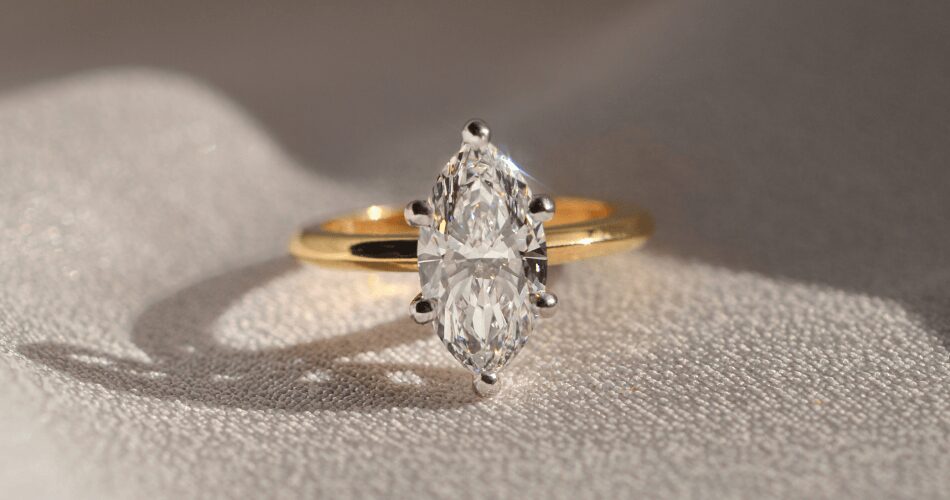
This describes the diamond’s outline and how it has been faceted. Common shapes include Round Brilliant, Princess, Oval, Cushion, Pear, Emerald, and Marquise. The cutting style affects how light interacts with the diamond and determines its overall brilliance and character.
Measurements
The diamond’s dimensions are recorded in millimetres, typically listing the diameter and depth. For example, a Round Brilliant diamond might read 6.45 – 6.49 x 3.98 mm. These precise measurements help buyers and jewellers verify proportions and ensure the stone has not been altered.
Carat Weight
This indicates the diamond’s exact weight to the hundredth of a carat (for example, 1.03 ct). While carat weight influences size, it is important to remember that two diamonds of the same weight can appear different in size depending on how they are cut.
Colour Grade
Diamonds are graded on a scale from D to Z, with D representing a completely colourless diamond and Z indicating noticeable yellow or brown tint. Most high-quality diamonds in Adelaide fall between D and H, offering a brilliant, white appearance that complements both modern and vintage settings.
Clarity Grade
Clarity measures the number, size, and location of natural inclusions or blemishes within a diamond. The scale ranges from Flawless (FL) to Included (I3). Most inclusions are microscopic and invisible to the naked eye, but they can still affect value. A clarity grade of VS1 or VS2 generally provides excellent balance between beauty and price.
Cut Grade
This is one of the most influential factors in a diamond’s brilliance. The cut grade assesses proportions, symmetry, and light performance. Grades range from Excellent to Poor. An Excellent cut diamond reflects light perfectly, producing exceptional sparkle and fire.
Polish and Symmetry
Polish refers to how smooth each facet is, while symmetry evaluates how precisely those facets are aligned. Both qualities influence how evenly light travels through the diamond. Ratings for polish and symmetry usually range from Excellent to Poor.
Fluorescence
Fluorescence describes how a diamond reacts under ultraviolet (UV) light. Some diamonds emit a soft blue glow, which can either enhance or slightly affect appearance depending on strength and colour grade. Certificates specify the intensity as None, Faint, Medium, Strong, or Very Strong.
Reading a diamond certificate allows you to compare stones accurately, make informed choices, and understand what justifies the price you are paying. When you know how to interpret these details, you can appreciate the craftsmanship, rarity, and quality behind every facet.
When Do You Need an Appraisal Instead?
While a diamond certificate provides scientific confirmation of your diamond’s quality, a jewellery appraisal serves a completely different purpose. The certificate tells you what you own, while the appraisal tells you what it is worth today. Knowing when to obtain an appraisal is just as important as understanding the details of certification, especially for valuable or sentimental pieces.
You should consider getting an appraisal whenever you need an accurate monetary value assigned to your jewellery. The most common situations include:
- If you own diamond rings in Adelaide or other fine pieces, an appraisal is essential for insurance coverage. Insurance companies require an up-to-date valuation to determine replacement cost in case of loss, theft, or damage. Without a valid appraisal, you might receive compensation that does not reflect your jewellery’s actual value.
- Selling or Trading In Jewellery: An appraisal helps you understand the market value of your jewellery before selling or trading it in. This ensures you receive a fair price based on current diamond and metal prices. Appraisers take into account design, craftsmanship, and market demand, giving you a clear idea of what your piece could realistically sell for.
- Estate Planning and Inheritance: Jewellery is often passed down through generations, both for sentimental and financial reasons. A professional appraisal helps establish accurate records for estate documentation, ensuring that each heir understands the true worth of what they are receiving. This transparency can prevent disagreements and makes estate division smoother and more equitable.
- Verifying Custom or Designer Pieces: If your jewellery was designed by a well-known Adelaide jeweller, or is a custom-made creation, an appraisal helps verify the craftsmanship and brand reputation that contribute to its value. Custom or one-of-a-kind pieces may not have comparable items on the market, so professional appraisal ensures that these unique qualities are recognized and reflected in the valuation.
- Tracking Value Over Time: The jewellery market, like any other, changes with time. Gold and platinum prices rise and fall, and diamond demand shifts based on trends and availability. Because of this, experts recommend having your jewellery appraised every two to three years. Regular updates ensure that your insurance policy always reflects the current replacement cost and that your investment remains fully protected.
- Legal or Financial Purposes: In some cases, appraisals are required for legal proceedings, financial settlements, or charitable donations. A formal appraisal provides legally recognized documentation that stands as objective evidence of the jewellery’s value.
In short, while a diamond certificate validates the authenticity and quality of your stone, an appraisal determines what that stone is actually worth in the real world. Both documents complement each other and serve different yet equally important roles in protecting your investment.
By keeping your appraisals current and performed by qualified professionals, you ensure that your Adelaide jewellery retains not only its emotional significance but also its rightful financial value.
Common Myths About Diamond Certification
Even though diamond certification is one of the most reliable ways to verify a stone’s authenticity, there are still many misunderstandings about what it actually means. These misconceptions can lead buyers to make uninformed or costly decisions. Understanding the truth behind these myths helps ensure that every diamond purchase is based on facts, not assumptions.
Below are some of the most common myths about diamond certification, and the reality behind each one:
Myth 1: All Diamonds Are Certified
This is one of the biggest misconceptions among jewellery buyers. Not all diamonds on the market are certified. In fact, many retail stores and online sellers offer uncertified stones to reduce costs or avoid strict grading standards. A diamond without certification may look appealing under store lighting, but you have no proof of its true quality or authenticity. Always ask for the certificate before making a purchase, and verify that it comes from a reputable laboratory such as GIA, AGS, HRD Antwerp, or IGI.
Myth 2: A Jewellery Appraisal Is the Same as Certification
An appraisal is not the same as certification. Certification provides a scientific and objective assessment of a diamond’s characteristics, while an appraisal assigns a value based on market conditions and craftsmanship. The two serve different purposes and should not replace each other. Owning both gives you the best combination of accuracy and protection.
Myth 3: Certification Is Only Necessary for Expensive Diamonds
Every diamond, regardless of size or price, benefits from certification. Even smaller or more affordable stones deserve proper documentation. Certification provides peace of mind for any buyer by confirming that the diamond’s qualities match what is being advertised. It also ensures that you receive fair value for your purchase, whether it is a pair of diamond earrings or a large diamond engagement ring in Adelaide.
Myth 4: Certification Increases the Price of a Diamond
Some buyers assume that certification adds unnecessary cost. In reality, the certification fee is minimal compared to the overall price of a diamond and the security it provides. A certified diamond often retains or increases its value over time because it can be confidently resold or insured. The added transparency makes the purchase far more worthwhile in the long run.
Myth 5: All Certificates Are Equal
Not all diamond certificates are held to the same standards. Laboratories such as GIA and AGS are known for their accuracy and strict grading procedures, while others may apply more lenient criteria. Always check the name of the certifying body and verify the report online. Reputable Adelaide jewellers partner only with trusted laboratories to ensure consistency and credibility.
Myth 6: Lab-Grown Diamonds Do Not Need Certification
Lab-grown diamonds are chemically identical to natural diamonds, which means they also require certification to confirm their quality. Reputable laboratories issue grading reports for both types of diamonds, clearly indicating whether the stone is natural or lab-grown. This transparency protects both the buyer and the jeweller by ensuring honesty in every transaction.
Myth 7: Certification Lasts Forever Without Review
While a certificate remains valid for the life of the diamond, other factors such as re-cutting or damage can alter its characteristics. If a diamond has been re-polished or modified, it should be re-evaluated by a gemological laboratory to obtain an updated report. This keeps your records consistent and reliable.
Understanding these myths helps jewellery buyers make confident and informed choices. Certification is not simply an added feature; it is an essential safeguard that ensures honesty, quality, and long-term value in every diamond purchase.
How Can You Ensure a Diamond’s Authenticity?
At DDS Diamonds, we understand that purchasing a diamond is both a personal and financial investment. Every client who walks into our studio wants the same assurance that the diamond they choose is genuine, ethically sourced, and graded to the highest standards. Authenticity is not just about having a beautiful sparkle; it is about having complete trust in what you are buying.
So how can you ensure your diamond is authentic?
1. Always Ask for a Certificate
A diamond certificate is your first layer of protection. It confirms that your diamond has been examined and graded by an independent gemological laboratory such as GIA, AGS, HRD Antwerp, or IGI. Each certificate details the diamond’s cut, colour, clarity, and carat weight, ensuring complete transparency. Every certified stone from DDS Diamond Design Studios comes with this documentation, so you can make your purchase with full confidence.
2. Check for Laser Inscription
Most certified diamonds carry a microscopic identification number etched on the girdle. This number matches the one listed on the certificate, linking your diamond permanently to its official grading report. Before any diamond leaves our studio, our experts verify that this inscription corresponds precisely with the certification details, guaranteeing authenticity.
3. Have It Professionally Verified
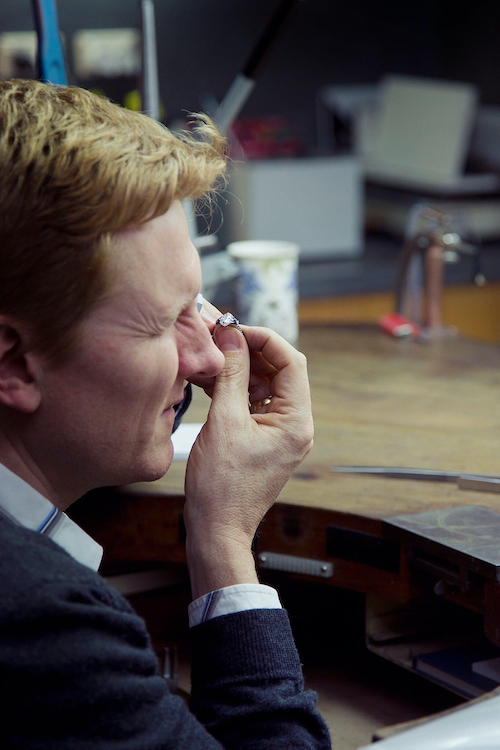
At DDS Diamond Design Studios, our in-house gemologists use advanced testing tools such as magnification, UV light, and specialized instruments to authenticate each stone before it becomes part of a finished piece. This careful verification process ensures that your diamond’s quality, origin, and specifications meet the highest international standards.
4. Buy from a Trusted Jeweller
A certificate alone cannot replace the peace of mind that comes from buying from a jeweller with a long-standing reputation for honesty and craftsmanship. For over two decades, DDS Diamond Design Studios has been known throughout Adelaide for our integrity, precision, and deep commitment to transparency. We guide every client through their diamond’s report, explaining what makes each stone unique so that every purchase is an informed one.
When you choose DDS Diamond Design Studios, you are not only purchasing a diamond. You are investing in trust, expert craftsmanship, and authenticity that has been proven time and again. Every diamond engagement ring, pair of earrings, and custom creation we design is certified, ethically sourced, and handcrafted in Adelaide with meticulous care.
Authenticity is more than a promise… it is our guarantee. Visit our studio in Burnside or explore our certified diamond collections online to see what true craftsmanship and transparency look like. Our specialists will guide you through every detail, helping you choose a diamond that reflects your story and stands as a lasting symbol of confidence and beauty.
Book your private consultation today at DDS Diamond Design Studios and discover the difference that genuine authenticity makes.